---
title: Digital Twin, AI, Smart Building – What Is Reality and What Is Hype?
description: On May 14, we will be hosting the 7th Proptech Hungary Conference in Budapest. Let’s take a look at which promises have been fulfilled and which have not.
image: https://proptech.hu/hubfs/ChatGPT%20Image%202026.%20febr.%2024.%2016_54_33.png
---
[Skip to main content](https://proptech.hu/en/news/digital-twin-ai-smart-building-what-is-reality-and-what-is-hype#main-content)
- [Proptech Hungary](https://proptech.hu/en/)
- [ProptechZoom](https://proptech.hu/en/proptechzoom)
- [Zoltán Kalmár](https://proptech.hu/en/zoltan-kalmar)
[ ](https://proptech.hu/en/?hsLang=en)
- [Show submenu for Events Events](https://proptech.hu/en/events)
- Show submenu for Proptech Conferences Proptech Conferences
- [Proptech Hungary Conference 2026](https://proptech.hu/en/proptech-hungary-conference-2026)
- [Proptech Hungary Conference 2025](https://proptech.hu/en/proptech-hungary-conference-2025)
- [Proptech Hungary Conference 2024](https://proptech.hu/en/proptech-innovation-now-2024)
- [Proptech Hungary Conference 2023](https://proptech.hu/en/proptech-hungary-conference-2023)
- [Proptech Hungary Conference 2022](https://proptech.hu/en/proptech-hungary-konferencia-2022)
- [Proptech Hungary Conference 2019](https://proptech.hu/en/proptech-hungary-conference-2019)
- [Proptech Hungary Conference 2018](https://proptech.hu/en/proptech-hungary-conference-2018)
- Show submenu for Startup Events Startup Events
- [Hack The Mall 2025](https://proptech.hu/en/hackthemall)
- [Proptech Pioneer Awards 2025](https://proptech.hu/en/proptech-pioneer-awards-2025)
- [Proptech Startup 2022](https://proptech.hu/en/proptech-startup-2022)
- [Proptech Hackathon 2019](https://proptech.hu/en/proptech-hackathon-2019)
- [Proptech News](https://proptech.hu/en/news)
- Show submenu for About About
- [Vision](https://proptech.hu/en/proptech-hungary-vision)
- [Contact](https://proptech.hu/en/contact)
- [Newsletter](https://proptech.hu/en/newsletter)
- Show submenu for translations EN
- [Magyar](https://proptech.hu/hirek/digital-twin-ai-okosépület-de-mi-ebből-a-valóság-és-mi-a-hype)
Open main navigation
Close main navigation
- Show submenu for Events Events
- Events
- [Events](https://proptech.hu/en/events)
- Show submenu for Proptech Conferences Proptech Conferences
- Proptech Conferences
- [Proptech Hungary Conference 2026](https://proptech.hu/en/proptech-hungary-conference-2026)
- [Proptech Hungary Conference 2025](https://proptech.hu/en/proptech-hungary-conference-2025)
- [Proptech Hungary Conference 2024](https://proptech.hu/en/proptech-innovation-now-2024)
- [Proptech Hungary Conference 2023](https://proptech.hu/en/proptech-hungary-conference-2023)
- [Proptech Hungary Conference 2022](https://proptech.hu/en/proptech-hungary-konferencia-2022)
- [Proptech Hungary Conference 2019](https://proptech.hu/en/proptech-hungary-conference-2019)
- [Proptech Hungary Conference 2018](https://proptech.hu/en/proptech-hungary-conference-2018)
- Show submenu for Startup Events Startup Events
- Startup Events
- [Hack The Mall 2025](https://proptech.hu/en/hackthemall)
- [Proptech Pioneer Awards 2025](https://proptech.hu/en/proptech-pioneer-awards-2025)
- [Proptech Startup 2022](https://proptech.hu/en/proptech-startup-2022)
- [Proptech Hackathon 2019](https://proptech.hu/en/proptech-hackathon-2019)
- [Proptech News](https://proptech.hu/en/news)
- Show submenu for About About
- About
- [Vision](https://proptech.hu/en/proptech-hungary-vision)
- [Contact](https://proptech.hu/en/contact)
- [Newsletter](https://proptech.hu/en/newsletter)
- Show submenu for translations EN
- English
- [Magyar](https://proptech.hu/hirek/digital-twin-ai-okosépület-de-mi-ebből-a-valóság-és-mi-a-hype)
- Search
- [Subscribe](https://proptech.hu/en/newsletter)
- [Proptech Hungary](https://proptech.hu/en/)
- [ProptechZoom](https://proptech.hu/en/proptechzoom)
- [Zoltán Kalmár](https://proptech.hu/en/zoltan-kalmar)
[Subscribe](https://proptech.hu/en/newsletter?hsLang=en)
Search
[AI](https://proptech.hu/en/news/tag/ai) [smart building](https://proptech.hu/en/news/tag/smart-building) [digital twin](https://proptech.hu/en/news/tag/digital-twin)
# Digital Twin, AI, Smart Building – What Is Reality and What Is Hype?
On May 14, we will organize the Proptech Hungary Conference in Budapest for the seventh time. Seven years is long enough to see what has become reality from the promises, and what has not. At this year’s conference, international and Hungarian experts will present real case studies and practical examples.
The real estate and construction industry is one of the slowest economic sectors to digitalize. While finance, commerce and healthcare have transformed radically over the past ten years, many areas of the real estate market still operate the same way they did twenty years ago. Paper-based processes, Excel-driven data management, people-dependent decisions.
At the same time, something has changed in the past two or three years. Not the technology — that was already available before. The pressure has changed. Sustainability expectations, energy prices, labor shortages and increasingly complex operational tasks have together created a situation where digitalization is no longer an option, but a question of competitiveness.
This is exactly what this year’s conference explores: it is not about what the smart building might look like someday, but about where we are now, what works, and what we are still only promising - summarized Zoltán Kalmár, founder of [proptech.hu](https://proptech.hu/?hsLang=en) and organizer of the conference, when describing the conference vision.
## A Shift in Mindset in the Real Estate Market
The first speaker of the conference, Gábor Bojár, founder of Graphisoft, has been working in the industry for forty years, which means he has already seen enough not to get excited by what others call a revolution. Instead of a technology showcase, his opening presentation offers a broader perspective: why the digitalization of the construction industry is progressing more slowly than it should, and what change truly depends on.
His answer is clear: it is not a technological question, but a question of mindset. BIM is not software. The digital twin is not a tool. These are ways of thinking, and they will not create business value until the industry changes its philosophy about its own workflows.
## The Digital Twin from a New Perspective
The smart building topic has appeared at many conferences in recent years, usually focusing on sensors, dashboards and energy efficiency. Troy Aaron Harvey, founder of PassiveLogic, approaches the question on a different level. PassiveLogic builds autonomous building control systems: a platform that not only measures and displays the state of a building, but understands it, simulates the consequences of decisions in advance, and acts in real time. This is what Harvey calls a real digital twin: not a parallel data model beside the building, but the operating logic of the building itself.
Buildings that today only react will soon think. This does not require more data, but a better model. Not a better dashboard, but autonomous decision logic. According to Harvey, a fragmented industry cannot be fixed with yet another set of fragmented technologies. A completely new, system-level way of thinking is needed — and for that, the willingness to innovate, a shift in mindset and capital are required from players who think not in quarterly cycles, but in the long term.
## Construction AI: The Hype and What Lies Behind It
Over the past two years, AI has become a mandatory topic at every industry conference. The real estate and construction industry is no exception, but here the gap between marketing and reality is particularly wide.
Stjepan Mikulic, founder of AIINAEC.COM, is one of the best-known figures in this field. His presentation is not about AI solving everything, but about what it is actually good for, what it is not, and how it can be turned into business value in the real estate market. In design, project management, document management and operations, more and more real use cases are emerging — but these will only work if they are consciously embedded into processes.
Data alone is not a competitive advantage. It only becomes one if it results in better decisions. The industry’s biggest challenge is not that there is not enough technology, but how effectively companies can convert the available technology into business value. This is not an IT issue, but a leadership and organizational issue.
## Under-the-Hood Developments in the Real Estate Market
Of course, one annual professional conference is not enough to digitalize the Hungarian real estate market, because market players need to stay in contact and exchange views throughout the year as well. Beyond organizing events, proptech.hu also carries out real estate digitalization agency and mentoring work — observing, helping, developing and thinking together.
Over the past years, we have visited many companies, facility managers, property managers, developers and AEC companies, and we can state with certainty: far more development is taking place than what becomes public. Internal software is being built, AI-based solutions are being tested, data integration projects are running, and automated facility management pilots are being launched.
There are already working models, but due to the nature of the industry, market players are less likely to share these with one another. There are several reasons for this, but the real estate market does not A/B test, does not support a culture of failure, and rarely puts half-finished solutions on display. One reason is that this is a B2B market, and a strong brand is one of the most important steps toward trust. Another is that companies rarely share solutions they consider a competitive advantage; they would rather nurture and develop them internally.
The conference also aims to change this: alongside working examples, the lessons of first attempts can also be shared, because everyone can learn from them. It may even turn out that several players are working on the same challenges and could share their experiences and difficulties with one another.
## The Human in the Matrix
One actor is usually missing from most smart building debates: the user. The employee, tenant or operations staff member who actually uses the building, and who often overrides what the system considers optimal. Automation is predictable; people are not. If the system does not adapt to them, they simply switch it off. We may think this is an extreme case, but it is everyday reality in building operations.
This is why this year’s program is not only about technology. We will talk about energy optimization, building simulation, smart building integration, and the role of the human within the system.
What is worth implementing? Where does technology pay off? What mistakes can be avoided? How does data become a decision, a pilot become a working system, and a smart building become a real business advantage?
The Proptech Hungary Conference is a human-scale event where the most interesting and innovative players in the market are in the same room, and where real professional debates take place on May 14 — not marketing presentations.
Discounted tickets are available until May 1. → [Tickets and Program](https://proptech.hu/en/proptech-hungary-conference-2026?hsLang=en)
Follow us on [Facebook](https://www.facebook.com/proptechhungary/) and [Linkedin](https://www.linkedin.com/company/proptechhungary)!
Tags
[AI,](https://proptech.hu/en/news/tag/ai) [smart building,](https://proptech.hu/en/news/tag/smart-building) [digital twin](https://proptech.hu/en/news/tag/digital-twin)

**[Zoltán Kalmár](https://proptech.hu/en/news/author/kalmár-zoltán)**
May 31, 2026, 10:25:58 PM
[Follow me on my website](https://proptech.hu/en/news/proptech.hu?hsLang=en) [Follow me on LinkedIn](https://www.linkedin.com/in/kalmarzoltan/)

### Keep up to date with the world of proptech!
Sign up for our newsletter and be the first to hear about the latest market trends, events, and community news!
###### Categories
- [Proptech Hungary Conference](https://proptech.hu/en/news/tag/proptech-hungary-conference)
- [AI](https://proptech.hu/en/news/tag/ai)
- [Startup](https://proptech.hu/en/news/tag/startup)
- [BIM](https://proptech.hu/en/news/tag/bim)
- [Proptech](https://proptech.hu/en/news/tag/proptech)
###### Proptech news
- [Proptech.hu Conference – This Is What the Construction Industry Looks Like at the Dawn of the Third Information Revolution](https://proptech.hu/en/news/proptech-hu-conference-construction-industry-at-the-dawn-of-the-third-information-revolution?hsLang=en)
- [The Buildings of the Future Will Be Modeled at the Physics Level](https://proptech.hu/en/news/buildings-of-the-future-will-be-modeled-at-the-physics-level?hsLang=en)
- [How I Saved 4.5 Million Dollars with AI](https://proptech.hu/en/news/how-i-saved-4-and-half-million-dollars-with-ai?hsLang=en)
- [The Real Barrier to AI Adoption Is Not Technology – It Is Human Connection](https://proptech.hu/en/news/real-barrier-to-ai-adoption-is-not-technology-but-human-connection?hsLang=en)
### Related
[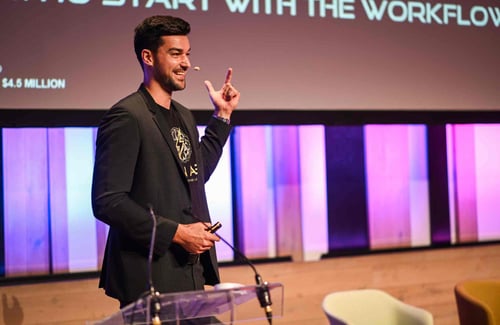 How I Saved 4.5 Million Dollars with AI Péter Smejkál • May 31, 2026, 10:01:22 PM](https://proptech.hu/en/news/how-i-saved-4-and-half-million-dollars-with-ai?hsLang=en)
[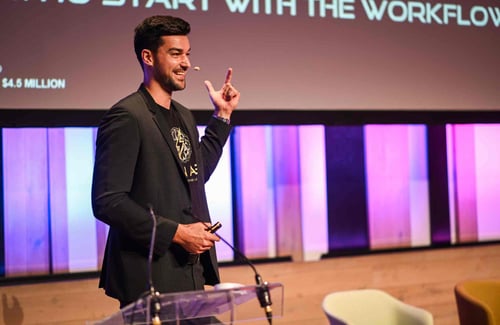 The Real Barrier to AI Adoption Is Not Technology – It Is Human Connection Zoltán Kalmár • May 31, 2026, 9:50:29 PM](https://proptech.hu/en/news/real-barrier-to-ai-adoption-is-not-technology-but-human-connection?hsLang=en)
[](https://proptech.hu/en/?hsLang=en)
- [Events](https://proptech.hu/en/events)
- [Resources](https://proptech.hu/en/news)
- [ProptechZoom](https://proptech.hu/en/proptechzoom)
- [Proptech Hungary](https://proptech.hu/en/)
- [Zoltán Kalmár](https://proptech.hu/en/zoltan-kalmar)
- [Contact](https://proptech.hu/en/contact)
©2026 All rights reserved - PropTech Hungary. [Privacy policy](https://proptech.hu/en/privacy-policy?hsLang=en)
-
-
-
```json
{
"@context" : "https://schema.org",
"@type" : "BlogPosting",
"author" : {
"@type" : "Person",
"name" : "Zoltán Kalmár",
"url" : "https://proptech.hu/en/news/author/kalmár-zoltán"
},
"dateModified" : "2026-05-31T20:25:58.503Z",
"datePublished" : "2026-05-31T20:25:58.000Z",
"headline" : "Digital Twin, AI, Smart Building – What Is Reality and What Is Hype?",
"image" : [ "https://proptech.hu/hubfs/ChatGPT%20Image%202026.%20febr.%2024.%2016_54_33.png" ],
"mainEntityOfPage" : {
"@id" : "https://proptech.hu/en/news/digital-twin-ai-smart-building-what-is-reality-and-what-is-hype",
"@type" : "WebPage"
},
"publisher" : {
"@type" : "Organization",
"logo" : {
"@type" : "ImageObject",
"url" : "https://proptech.hu/hubfs/Proptech-hu-logo-2025-transp.png"
},
"name" : "Kalmár & Co Bt"
}
}
```