

Smart Buildings 2026: AI-Driven Building Management & Predictive Sustainability
Why Excel No Longer Works
One of the biggest problems with traditional spreadsheet tools—such as Excel—is that often only the person who created the table understands it, or those to whom it was explained in detail. By contrast, modern software must be intuitive and user-friendly—more like an iPhone or Facebook: fast learning curve, natural use, and not limiting the user from working effectively over the long term.
At the same time, it is important to understand that digitalization is not a universal solution—it is neither a Swiss army knife nor a magic wand. In many cases, it makes processes easier and more transparent, but if applied without the right strategy and goals, it can become a costly dead end. Investments in digital tools should not be made for their own sake, but because they provide real operational advantages.
Digitalization is not an end in itself, but a tool—one that only works when supported by clear strategy, executive commitment and organizational maturity. In the coming period, success in the FM sector will belong to those who integrate digital transformation not only as a tool but also as a mindset.
Implementation ≠ Solution
Selecting and implementing the right software does not, by itself, solve all problems. Successful digital transformation requires internal competencies, dedicated ownership, active user involvement and continuous education. None of this works without a well-considered strategy that starts by asking the right questions.
In my yearbook article two years ago, I highlighted change management, organizational culture shaping and digital readiness as the most important factors—and this remains true today. Digitalization is primarily a question of leadership decision and responsibility.
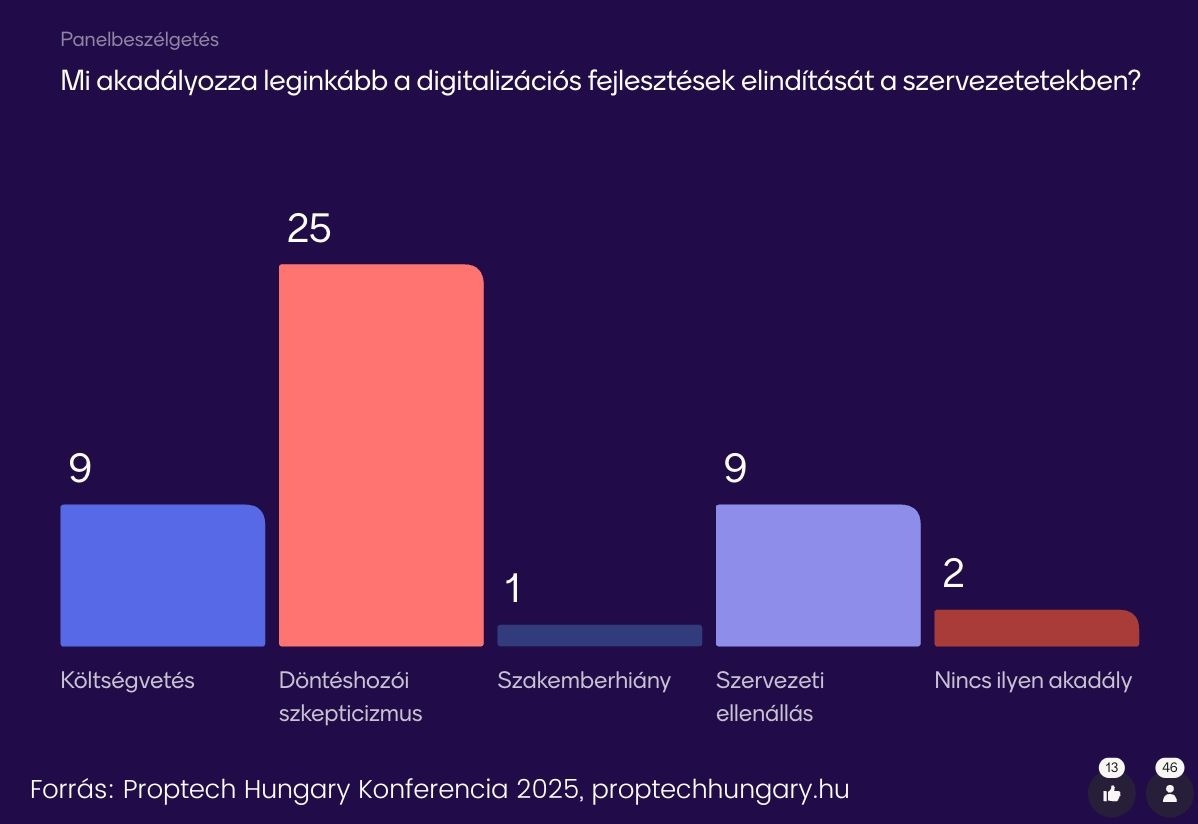
This same insight was echoed in responses from participants at the 2025 Proptech Hungary Conference: according to them, the greatest skepticism toward digitalization is found among decision-makers. And without strong leadership support and commitment, it is not even worth starting—the transformation is doomed to fail.
Another study, however, found that these very decision-makers are the ones who most need accurate, structured and real-time data to make objective, data-driven decisions.
FM Digitalization Trends Over Two Years
Two years ago—in my previous yearbook article—we were still clarifying many basic concepts. In 2023, expectations toward FM digitalization focused on greater transparency, cost control and data-driven decision-making. Today it is clear: for the actors of facility management, digitalization has become a strategic priority—although many still do not recognize or do not want to recognize this.
Over the past two years, FM technologies—especially IoT and AI-based systems—have evolved significantly. They now enable new levels of predictive maintenance, energy optimization and improved user experience. Digitalization is no longer just a tool: it is a competitiveness factor, and increasingly an expectation.
Innovation Creates Demand
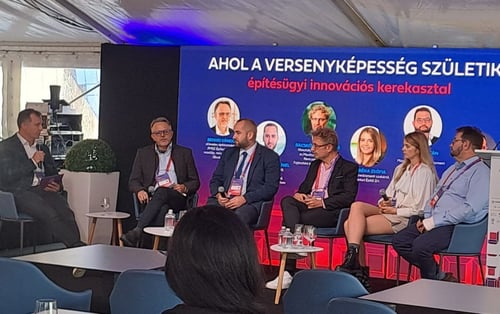
One of the most interesting lessons is that innovation generates not only solutions but also demand. When new digital options emerge in the market, clients begin requesting them—even when they do not fully understand their long-term implications. At the 2025 Proptech Hungary Conference we saw the same: while we once had to convince clients of the necessity of BIM-based approaches, today many actively seek these solutions.
BIM FM – Using Data to Support Operations
BIM FM (Building Information Modeling for Facility Management) means that the entire building operation process takes place within a digitally modeled environment. This enables predictive maintenance, data-driven development decisions, and improved user and owner experience.
BIM FM is the logical result of digital thinking from the beginning of a project: data remains where it is created, eliminating the cost of reproducing or re-uploading information later. While experts easily recognize these advantages, clients still often struggle. Although interest in innovation is growing, education is still lacking—leading to a situation where clients discover BIM-related costs only at project start.
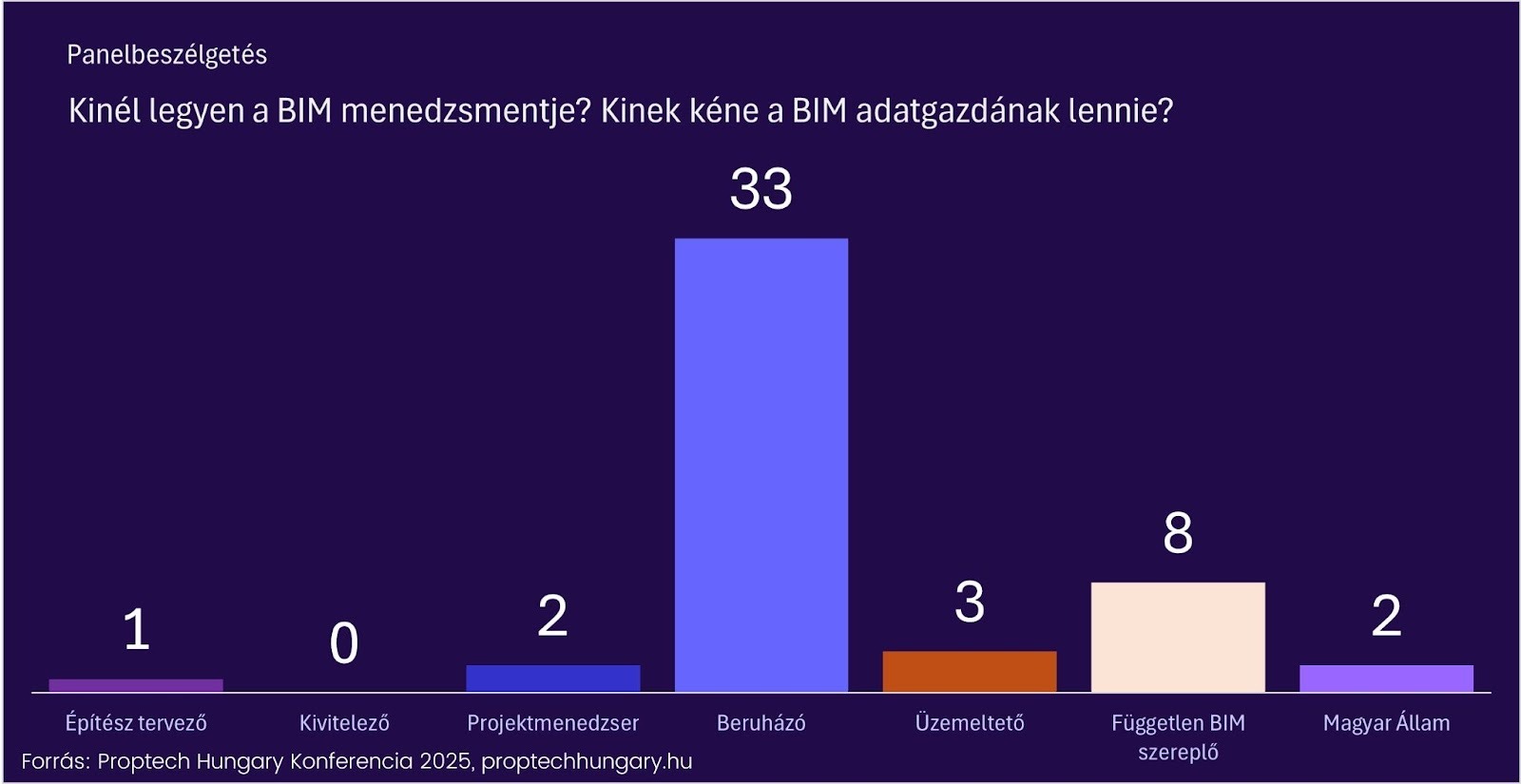
The long-term return is guaranteed, but the decision must be made at the beginning—and professionals must clearly explain and support this decision. It is still unclear who should be the BIM data owner, but as we learned at the Proptech Conference, it is clear where this ownership should sit: with the property owner, who can sell the data together with the asset.
BIM FM is not limited to a single building. A good example is the Saudi Arabian "The Line" project, presented at the 2024 Proptech Conference, whose entire digital model was created in Unreal Engine and can be navigated in real time. Whether the city will ever be built is unknown, but the project shows a new dimension of BIM: entire districts and complexes can be digitized and optimized using this method.
In Hungary, the integrated developments of HelloParks are considered pioneers: for them, BIM FM is not an afterthought but a deliberate strategy from the start of design.
Despite all these benefits, not all buildings are designed in BIM today. One key reason is insufficient technological maturity. In Western Europe adoption is faster due to the availability of tools and supporting ecosystem. In Hungary adoption is hindered by lower digital readiness and limited willingness from clients to invest in digital technologies.
The Rise of IoT – The Future of Data-Driven Operations
IoT was once a buzzword, now mentioned less frequently—yet embedded everywhere. Consider what a new car or a washing machine can do today. Building systems and BIM also drive demand for new technologies, which have become far more widespread in just a few years. Edge computing made data collection more efficient—processing happens near the source, resulting in clean, usable data.
IoT offers far more than stereotypes suggest. Smart buildings are not just about lowering blinds or turning off lights. In business and industrial environments, millions can be saved simply by preventing unnecessary heating or cooling for empty spaces. Sustainability expectations—ESG audits, for example—further amplify the importance of IoT technologies.
The operational phase of a building is far longer than construction. Sensors already collect data on system performance, but interpreting this data used to require costly human effort. AI opened a new era: it identifies patterns that predict failures, enabling predictive maintenance—reducing downtime and operational costs.
This is particularly critical in industrial and logistics facilities where downtime can cause losses of millions of euros within hours. The Hungarian market also sees more developers/operators—often startups—who think in long-term data usage. AI plays a key role in maintenance, energy management and user experience.
Artificial Intelligence in FM – A Paradigm Shift
AI is not just another digital tool—it redefines how facility management works. The question is no longer what can be automated, but how much building operation can be delegated to intelligent, learning algorithms.
With AI, reactive operations are replaced by predictive and proactive models. Predictive maintenance is no longer limited to condition monitoring—AI predicts failures based on mechanical data, sensor feedback and runtime. This dramatically reduces unplanned downtime, increases reliability and optimizes maintenance cost structures.
AI-driven BMS platforms elevate operations to a new level. They provide unified, easy-to-understand interfaces for all stakeholders—receptionists, subcontractors, technicians. Unified data models increase efficiency, reduce errors and improve transparency.
Sensors support energy efficiency and ESG goals as well. Smart lighting and HVAC systems adjust according to occupancy, weather or even electricity market pricing.
User experience also transforms. AI-powered chatbots and digital assistants deliver faster, personalized service while analyzing feedback and identifying recurring issues.
The Changing Role of FM Professionals
As AI spreads, the role of FM professionals evolves. Routine tasks—ticket handling, scheduling, basic troubleshooting—become automated. Human resources shift toward strategy, data analysis and service development. FM professionals become “AI interpreters”—experts who understand AI outputs and turn them into business decisions.
This shift also demands cultural change. AI adoption is not only a technical step—it requires mindset transformation. Organizations must integrate AI into daily operations, and employees must learn to trust and collaborate with a "digital colleague."
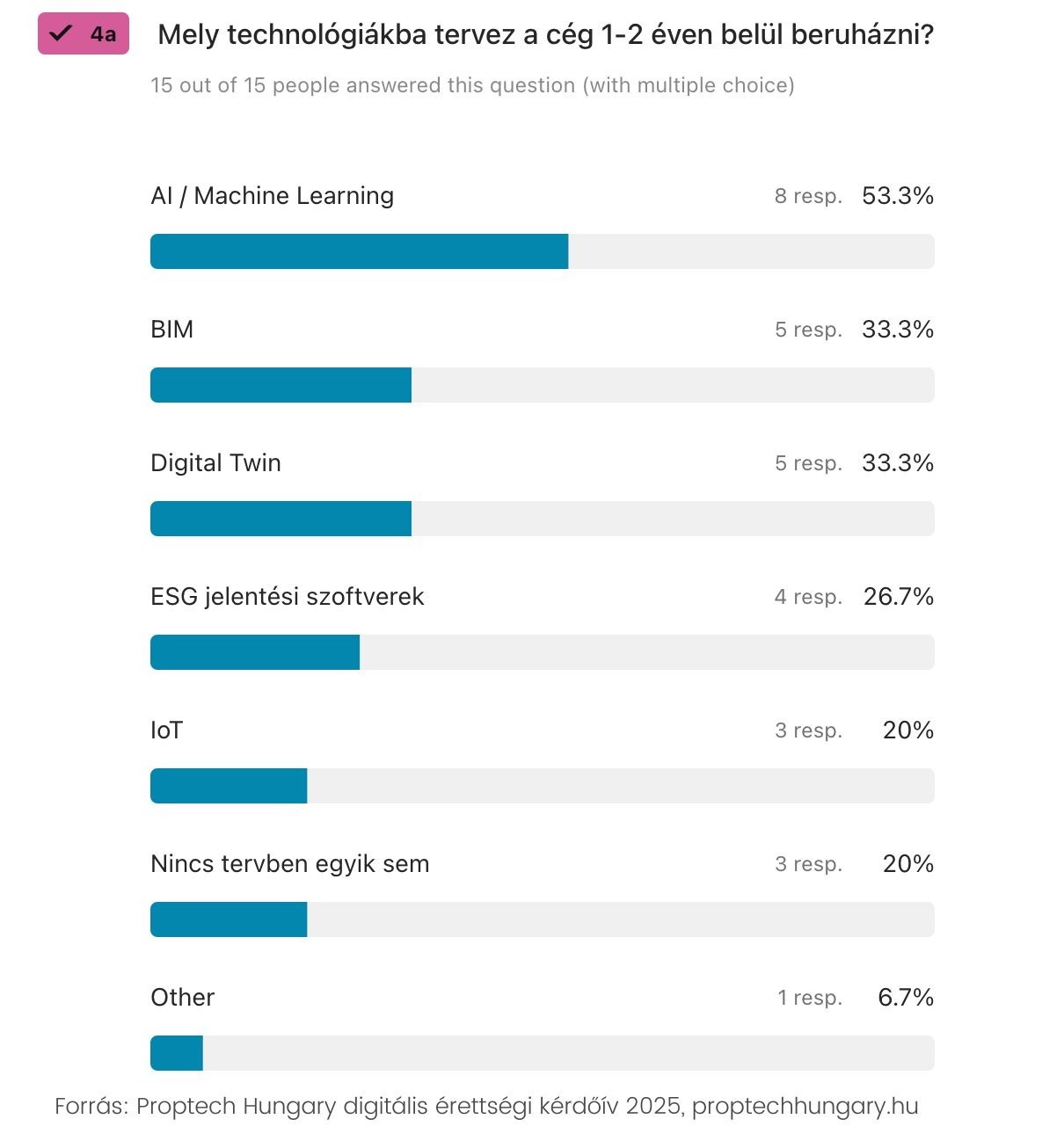
AI is not the future—it is already the present. Research shows it is the number-one technology FM stakeholders plan to invest in. Market leaders already leverage AI for operational efficiency, cost reduction and improved satisfaction. Those who adopt early gain competitive advantage; those who delay risk being displaced by AI-driven competitors.
Data Ownership
One of the most critical yet overlooked issues: Who owns the data?
Who is responsible for data quality, availability and security?
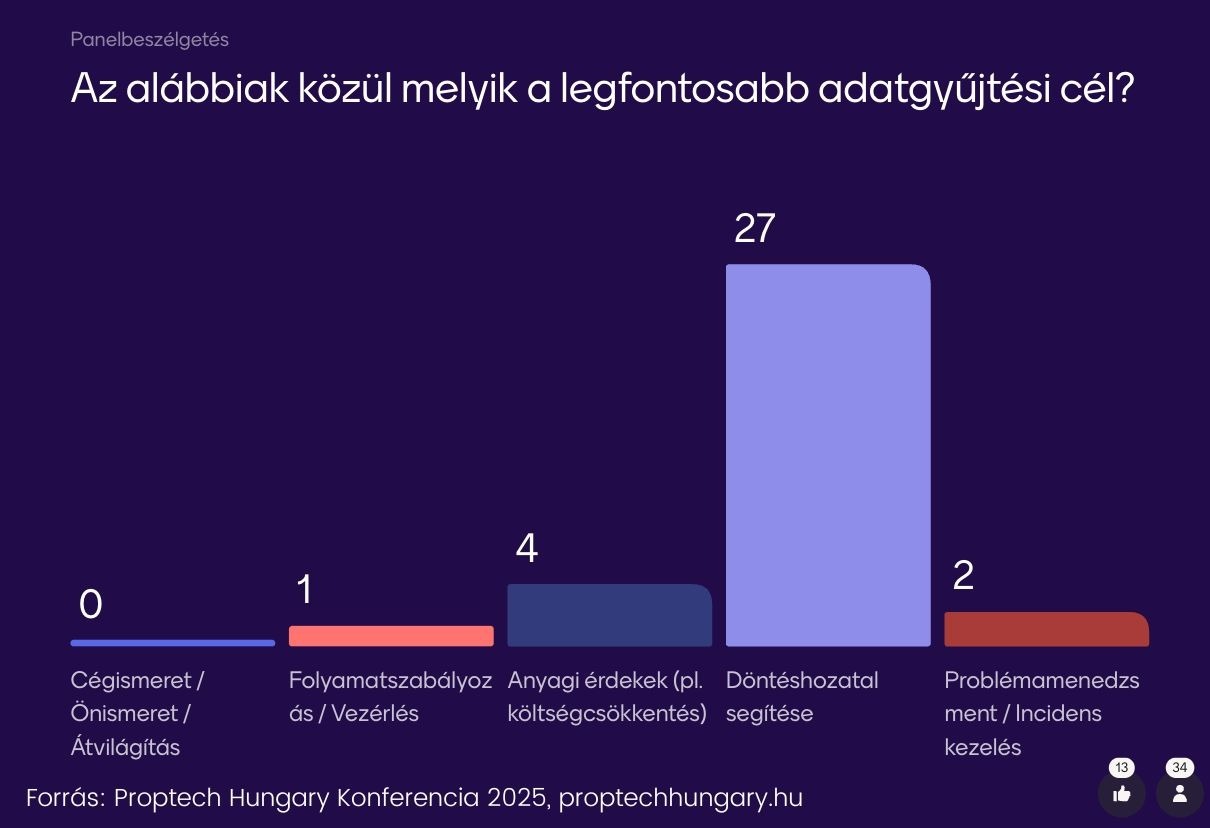
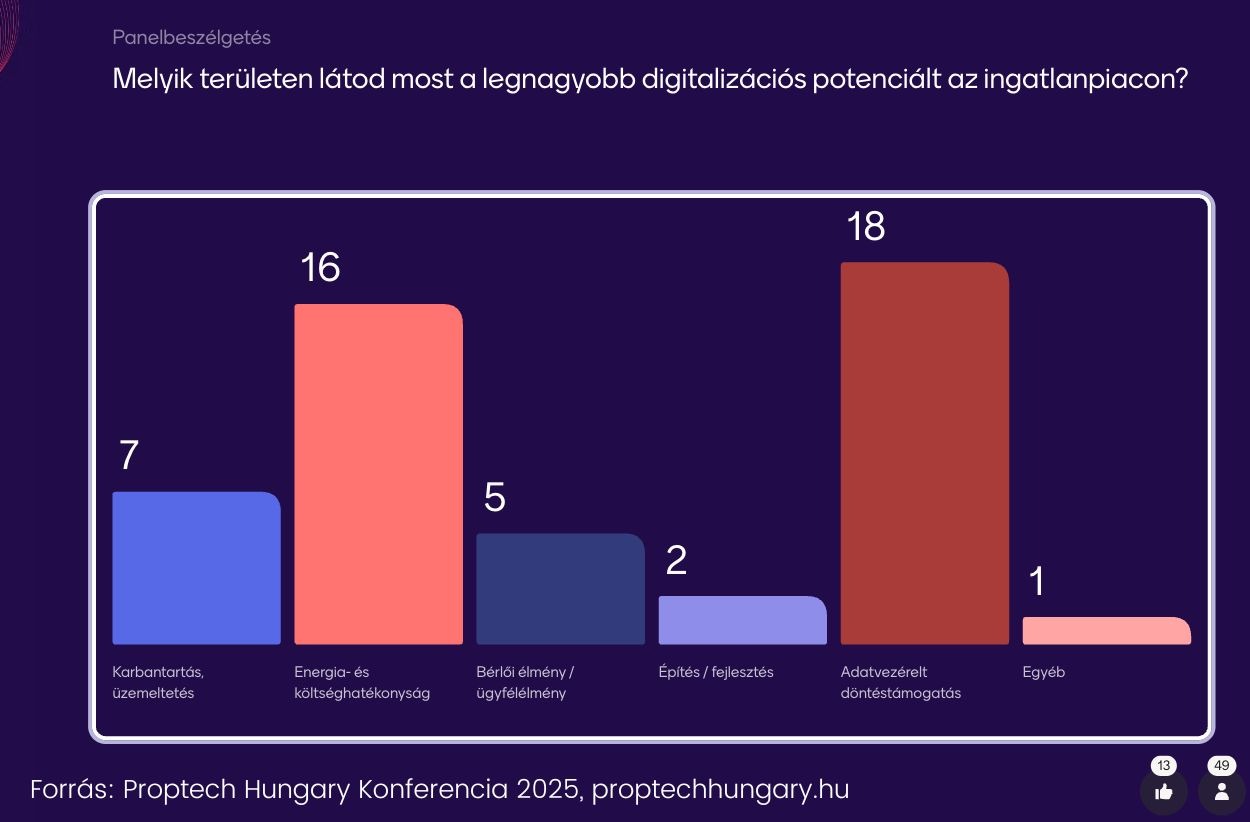
FM digitalization success often depends less on the technology itself and more on data governance. Responses from the Proptech Hungary 2025 Conference reveal that the industry still seeks clarity on this point. Energy efficiency and data-driven decision support seem to hold the largest potential.
Regulation and Sustainability Factors
Regulatory processes across Europe are tightening—the AI Act is a prime example, with some experts warning it may harm Europe’s already struggling AI sector. Similar patterns appeared with early ESG regulation, later softened over time. Although some sustainability targets shift, companies face increasing expectations.
IoT will gain new momentum—manufacturers simply emphasize it less. Automated energy regulation is becoming standard, EV charging is expected in office buildings, and users increasingly demand ease of use, low maintenance and reduced cost—not just smartness for its own sake.
Over the past two years we saw a fast rise in client interest, but education is still insufficient. Industry actors must explain what BIM is and why it is beneficial. Early adopters have already paved the way; solutions are stable; it is time to accept them.
The goal now: autonomous buildings—properties operated largely by AI agents and IoT systems. This will not happen in 1–2 years, but the foundations are in place, and AI continues to accelerate innovation.
Three Key Focus Areas
1. Education
Stakeholders must place stronger emphasis on communicating the benefits of digital solutions. Events, demonstrations and business forums help show real, working technologies.
2. Find the Real “Why”
Clients often do not know why they want digitalization. Our task is to help them articulate real benefits—not to shoot down their ideas, but to guide them toward clarity.
3. ROI and Financial Models
Interest in digitalization is often more aspiration than true commitment—especially when costs appear. Professional real estate operators should think in proper financial models. IoT should be treated not as CAPEX, but as OPEX.
Long-term benefits are clear: cost efficiency, fewer errors, faster operational response and improved user experience. The coming years will require mindset change, education and strong expert support to turn interest in innovation into widespread implementation.
Zoltán Kalmár, ProptechZoom
IMPORTANT!
This article will appear in the FM Benchmarking 2025 yearbook, published on November 20, together with other insightful analyses.
- supports decision-makers
- helps establish professional standards
- inspires development across the industry
- and serves as a useful decision-making tool for FM professionals and property owners.
The LEO Benchmarking books are built on a decade of data and present the evolution of the industry, its key players and initiatives.
The Benchmarking Working Group ensures reliable, relevant and up-to-date analysis.
Do not miss the most important professional publication of the year; order it from November 20 here.