
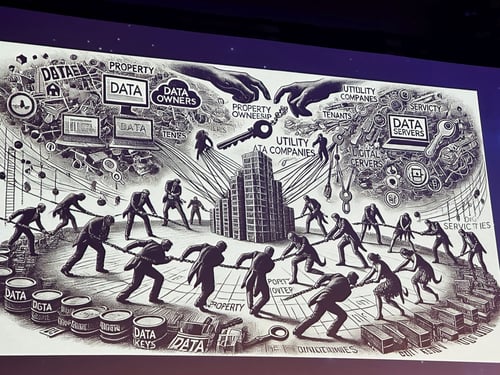
Proptech Connect 2024 – Who Owns the Data?
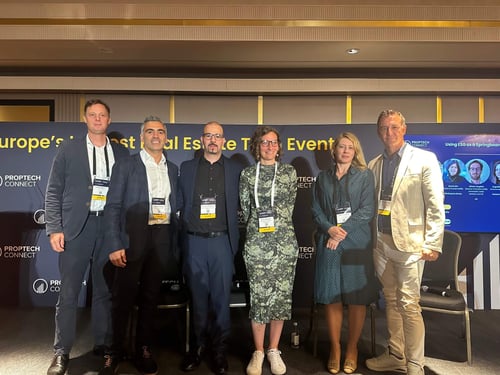
On September 4, the second day of Proptech Connect took place at the InterContinental – The O2 conference center in London. The event has grown into one of Europe’s largest proptech-focused gatherings, addressing the entire ecosystem of the real estate market: from developers and investors to operators, service providers and technology startups.
The two-day conference focused on digitalization, sustainability and the transformation of business models in the real estate sector – in other words, the key areas currently shaping the future of the industry.
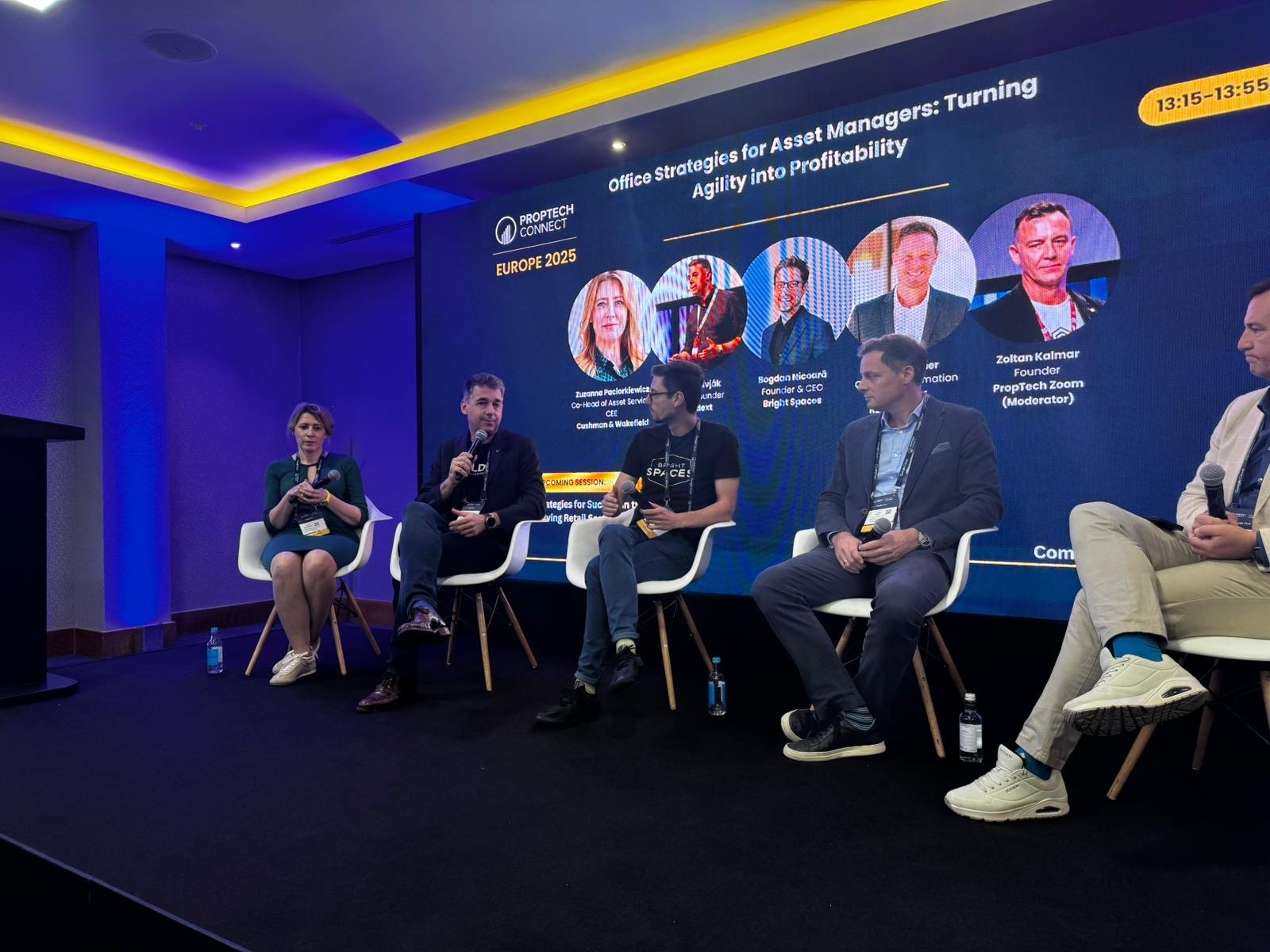
Among the highlights of the event was the panel discussion titled “Office Strategies for Asset Managers: Turning Agility into Profitability”, moderated by Zoltán Kalmár, founder of ProptechZoom. The panel included highly respected experts such as Zuzanna Paciorkiewicz (Cushman & Wakefield, CEE region), Jonas Hafner (Chief Transformation Manager, REINVEST Asset Management SA), Bogdan Nicoară (founder-CEO of Bright Spaces), and Csaba Livják (founder of Buildext). The discussion focused on the new role of the office, agility, and the challenges faced by asset managers.
The office redefined after 2020
Participants agreed that the changes experienced since 2020 have fundamentally reshaped the office market. Long-term leases are increasingly giving way to shorter, more flexible solutions, and monotenant structures are being replaced by multitenant concepts.
- CEE region: as Paciorkiewicz pointed out, due to high construction costs and ESG requirements, contracts longer than five years remain typical here.
- Retrofit and smart design: according to Livják, renovations, retrofit projects and smart interior design solutions play a key role.
- Location: Hafner emphasized that location remains a primary factor, especially in a world shaped by hybrid work.
How does agility become measurable value?
Three areas emerged during the panel discussion:
- Planning – rapidly adaptable interiors, digital tools (e.g., AI-based visualizations) that support tenant decision-making.
- Operations – integration of ESG considerations, data-driven decision-making, modeling of different scenarios.
- Technology – for example, the digital platforms of Bright Spaces, which simplify tenant communication and decision support, although pilot projects still encounter obstacles in many places.
Profitability and a new investor mindset
One key question was whether flexibility can be profitable. According to the panelists, the answer is yes – but only with a conscious strategy, clear KPIs and digital tools in place.
The high interest-rate environment and the rise of alternative investments (such as energy parks, startups, and crypto assets) create strong competition for the real estate sector. The office market will remain attractive to institutional investors only if it can prove the added value created through flexibility and technology.
By 2030: data-driven asset management
The panelists identified three key areas that will become unavoidable for every asset manager:
- Data-driven operations – decisions based on accurate, real-time information.
- Technological simplification – replacing complex systems with simple, user-friendly solutions.
- Crisis management and sustainability – energy efficiency, preparedness for climate change, and data security.
As Zoltán Kalmár summarized: “Agility is not merely a methodology or a buzzword, but the mindset that can make the office market viable and profitable in the long term.”