
Proptech.hu Conference – This Is What the Construction Industry Looks Like at the Dawn of the Third Information Revolution
10 Trends Shaping the Coming Years – Introduction to the Proptech Hungary Conference
Innovation in the real estate market today is no longer about a single technological solution, but about a layered, complex ecosystem that transforms the entire value chain—from design through construction and operations to customer experience.
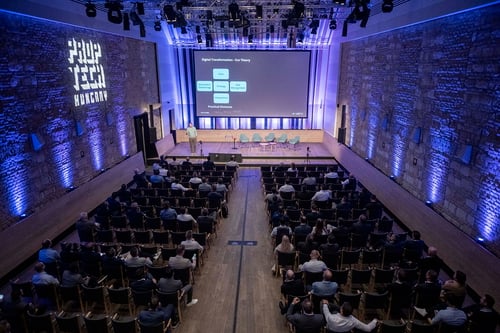
Year after year, the Proptech Hungary Conference presents this comprehensive picture with the involvement of both Hungarian and international experts. In recent years, alongside domestic innovators, speakers have arrived from Germany, the United Kingdom, Austria, the Netherlands and the Central and Eastern European region, showcasing through real, working examples where real estate innovation is heading.
One of the key messages of the conference is that innovation is not a collection of isolated solutions, but is organised along clearly identifiable trends. Together, these trends are shaping the future of the real estate market.
1. Digital Design and Construction
Data-driven design and construction have become baseline requirements. BIM, digital twins, lean construction and integrated project delivery are tools that reduce construction errors, increase transparency and shorten project delivery times. Several international speakers at the conference presented projects where BIM did not end at handover, but became one of the most important data sources for operations.
2. Data-Driven PropTech Solutions
Property valuation, sales and leasing are increasingly built on data. Automated valuation models, CRM systems, digital lead management and online contract execution not only make operations more efficient, but also more predictable. Several international presentations highlighted that poor data quality and lack of integration now represent a serious competitive disadvantage.
3. Smart Buildings and IoT-Based Operations
Buildings today continuously generate data. Measuring energy consumption, water usage, air quality and space utilisation enables predictive maintenance and cost optimisation. The examples presented at the conference clearly showed that smart buildings are not technological extras, but essential business and ESG tools.
4. FM and Operational Innovations
Facility management is one of the fastest-digitising areas of the real estate market. IoT-based fault reporting, AI-supported maintenance forecasting and digital workforce management significantly reduce downtime and improve service levels. The Proptech Hungary Conference regularly features international FM experts who present already operational, proven systems.
5. ESG and Green Innovation
Sustainability is no longer a communication topic, but a measurable and auditable performance factor. Green building certifications, energy-efficient technologies and automated ESG reporting are areas gaining increasing weight in investment decisions. Several conference sessions addressed how ESG is becoming a fully data-driven process.
6. Smart Cities and Urban-Level Digitalisation
Real estate is increasingly understood as part of an urban system. Mobility solutions, city-level data platforms and digital twins at municipal scale require new forms of collaboration between developers, operators and local authorities. These topics regularly appear in the strategic blocks of the Proptech Hungary Conference.
7. New Business Models in the Real Estate Market
Innovation is not only a technological issue, but also a business one. Co-living, co-working, space-as-a-service and tokenisation all indicate that real estate usage is becoming more flexible. Several international examples presented at the conference showed these models already operating successfully at market scale.
8. Artificial Intelligence in Real Estate Decision-Making
AI increasingly supports decision-making across the real estate market—from pricing and cost controlling to customer service. The use cases presented at the conference demonstrated that AI does not replace humans, but enables faster and more informed decisions.
9. Customer Experience and Sales Innovation
The real estate market is becoming increasingly user-centric. AR- and VR-based presentations, digital customer portals and tenant experience platforms all serve to make customer relationships long-term rather than one-off transactions.
10. Legal and Regulatory Digitalisation
E-contracts, eID solutions, smart contracts and digital land registries are all essential for scalable innovation. These topics appear more frequently at the conference, signalling that without digitalisation of the legal environment, true transformation is not possible.
The goal of the Proptech Hungary Conference is to discuss these trends not in isolation, but in relation to one another. The future of the real estate market does not depend on which technologies are available, but on whether we are able to think systemically, learn from one another, and create real business value from innovation.

Zoltán Kalmár
Dec 14, 2025 3:11:04 PM
Dec 14, 2025 3:11:04 PM